
Tetanus in dogs is uncommon, but the illness can become life-threatening when its toxin reaches the nervous system. Early signs may look like stiffness near a recent wound, then spread to the jaw, limbs, or breathing muscles. Prompt veterinary care matters because antitoxin cannot neutralize toxin already attached to nerve cells.
Yes, dogs can develop this disease after Clostridium tetani spores enter damaged tissue, often through a puncture wound. Dogs are relatively resistant, so cases are rare compared with people and horses. Muscle stiffness, lockjaw, swallowing trouble, or breathing difficulty after an injury needs urgent veterinary assessment.
| Question | Key fact |
|---|---|
| Can dogs get it? | Yes, although dogs are relatively resistant to the toxin. |
| Common entry point | A deep puncture or damaged tissue contaminated by soil, dust, or debris. |
| Typical onset | Often within several days to two weeks, although timing can vary. |
| Early signs | Localized stiffness, tremors, or rigidity near a wound. |
| Severe signs | Generalized spasms, lockjaw, swallowing trouble, inability to stand, or breathing difficulty. |
| Treatment | Wound care, antibiotics, early antitoxin when appropriate, muscle control, and supportive nursing. |
| Routine vaccine? | No standard canine vaccination is recommended for routine use. |
| Recovery | Improvement may start within a week, but full recovery can take several weeks. |
Key Takeaways
- The disease is rare in dogs, but severe cases can affect breathing and swallowing.
- The original wound may be tiny, hidden, or already healed when symptoms begin.
- Localized stiffness can spread and become generalized without early treatment.
- A dirty puncture wound deserves prompt veterinary attention, even before neurologic signs appear.
- Routine canine vaccination against this infection is not part of standard U.S. vaccine guidance.
Can Dogs Get This Infection?
Dogs can develop the disease, although they are less susceptible than people and horses. Merck Veterinary Manual describes dogs as relatively resistant to the bacterial toxin. VCA Animal Hospitals also notes that canine cases are uncommon, but they can still become serious.
The condition may stay localized near the original injury or spread through the body. Localized disease usually causes stiffness in one limb or nearby muscles. Generalized disease can cause widespread rigidity, painful spasms, swallowing problems, and respiratory complications.
What Causes Tetanus in Dogs?
Clostridium tetani spores live in soil and can persist in the environment for long periods. They cause trouble when they enter damaged tissue with little oxygen. Deep punctures, crushed tissue, and contaminated wounds can create conditions where the bacteria produce toxin.
The classic rusty nail story is misleading because rust itself does not cause the disease. Dirt or soil carried into a wound is the larger concern. A wound can also look minor or healed while toxin production continues underneath.
Soil and plant hazards come up often in our pet health and safety coverage, from wound infections to garden plants such as sunflowers around cats. Checking a dog’s paws, chest, and belly after outdoor time is the simplest way to catch a puncture early. A wound found the same day is far easier to manage than one discovered after symptoms begin.
Early Signs and Symptoms Owners Should Watch
Early canine tetanus may begin with stiffness near the wound or in one limb. Muscle tremors can appear, and the dog may seem unusually rigid when walking. These localized signs can remain limited, but they can also spread.
Generalized disease creates a more recognizable pattern because multiple muscle groups become affected. Facial muscles may tighten, the ears may stand unusually erect, and the jaw may become rigid. Bright light, sudden movement, or noise can trigger stronger spasms in affected animals.
Common warning signs include the following.
- Stiff or rigid gait.
- Muscle tremors or spasms.
- Rigid jaw or difficulty opening the mouth.
- Excessive drooling or difficulty swallowing.
- Raised third eyelids or a fixed facial expression.
- Tail held stiffly outward.
- Difficulty standing or walking.
- Breathing difficulty.
When Is It an Emergency?
Breathing trouble, swallowing difficulty, repeated spasms, or inability to stand requires emergency veterinary care. These signs can mean the toxin is affecting muscles needed for basic body functions. Don’t wait for a visible wound, because the original injury may no longer be obvious.
| What you notice | Suggested action | Why it matters |
|---|---|---|
| Fresh deep puncture or heavily contaminated wound | Call your veterinarian the same day | Prompt wound management can reduce infection risk. |
| New stiffness near a recent wound | Seek urgent veterinary assessment | Localized signs can progress to generalized disease. |
| Lockjaw, severe spasms, swallowing trouble, or breathing difficulty | Go to an emergency veterinary hospital now | These signs can threaten breathing, hydration, and nutrition. |
How Veterinarians Diagnose the Condition
Veterinarians usually diagnose the condition based on the dog’s history, physical exam, and characteristic muscle findings. A veterinarian may find a recent wound, although an entry point is not always visible. VCA notes that available toxin or bacterial tests are unreliable for routine diagnosis.
Additional tests can help assess complications rather than confirm the disease itself. In severe cases, bloodwork, urinalysis, chest imaging, or heart monitoring may be recommended. These tests can also help rule out other causes of stiffness, weakness, or swallowing trouble.
How Treatment Works
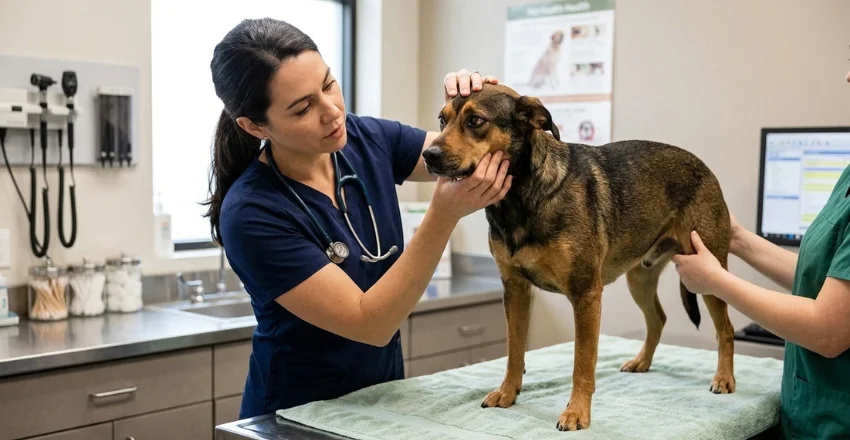
Treatment has several goals because no single therapy reverses toxin already attached to nerves. Veterinarians treat the wound, limit further toxin production, and control painful muscle activity. Severe cases often need hospitalization and intensive nursing support.
Treatment may include the following.
- Cleaning and surgical debridement when a wound can be identified.
- Antibiotics to eliminate remaining bacteria and stop additional toxin production.
- Antitoxin early in the disease when a veterinarian considers it appropriate.
- Sedatives or muscle relaxants to reduce spasms and distress.
- Intravenous fluids, nutritional support, and soft bedding when needed.
- A quiet, dim environment because stimulation can trigger spasms.
- Respiratory support for dogs with severe breathing impairment.
Antitoxin works only against toxin that has not yet attached to nerve tissue. Antibiotics target the bacteria, but they do not remove toxin already bound to nerves. That timing is why early recognition can make such an important difference.
Recovery Time and Prognosis
Recovery depends heavily on whether the disease stays localized or becomes generalized. VCA reports that improvement may appear within one week after treatment begins. Full recovery can still take three to four weeks, even with steady progress.
Dogs unable to stand, breathe normally, or swallow safely need more intensive care. Secondary problems, including aspiration pneumonia, can worsen the outlook. A dog that remains responsive but stiff may still need prolonged nursing while damaged nerve function recovers.
A 2007 retrospective study of 38 affected dogs, published in the Journal of the American Veterinary Medical Association, reported a 28 day survival rate of 77 percent. The University of California, Davis team behind that study found the poorest outlook in dogs whose heart rate or blood pressure became abnormal. Reported figures still vary widely, because case severity and the timing of treatment differ greatly between patients.
Do Dogs Need Tetanus Shots?
Routine canine vaccination against this disease is not recommended in standard U.S. practice. VCA specifically states that vaccination is not recommended because dogs rarely develop the illness. Prevention focuses on careful wound management and early veterinary attention.
AAHA’s current U.S. canine vaccination guidance lists core and risk-based vaccines for dogs. That list includes rabies, distemper, parvovirus, adenovirus, leptospirosis, and several lifestyle vaccines. Tetanus does not appear among the recommended canine vaccines in that guidance.
How to Reduce Risk After a Wound
Any deep puncture, bite, or heavily contaminated injury deserves prompt veterinary advice. A veterinarian can evaluate hidden tissue damage and decide whether professional cleaning is needed. Home care should never delay treatment if the wound is deep or the dog seems in pain.
After an injury:
- Check your dog after outdoor play for punctures, cuts, and embedded debris.
- Keep wounds clean and prevent licking while you arrange veterinary advice.
- Tell the veterinarian about soil, manure, bites, foreign objects, or crush injuries.
- Watch for stiffness, tremors, drooling, jaw changes, or swallowing trouble afterward.
- Return quickly if symptoms worsen, even when the skin wound looks better.
Wound care is only one strand of a wider picture, and our health and wellness section covers the human side of infection risk after bites and punctures. Noting the injury date helps a veterinarian build an accurate timeline. That detail often matters more than the wound’s size.
Frequently Asked Questions
Is Tetanus in Dogs Contagious?
The condition is not considered a contagious illness passed casually from one dog to another. Infection begins when environmental spores enter damaged tissue and produce toxin. Normal contact with an affected dog is not the usual route of infection.
Can a Rusty Nail Cause Tetanus?
A rusty nail can create a dangerous puncture, but rust is not the cause. Soil or debris on the object may carry bacterial spores into tissue. Any deep puncture deserves veterinary guidance because it can lead to several serious infections.
How Long After a Wound Can Signs Appear?
Signs often appear several days after the original injury, but timing varies. VCA describes a range from about three days to three weeks. Merck says the incubation period can extend from one to several weeks.
Can a Dog Give Tetanus to a Person?
The disease itself does not spread from an infected dog like a respiratory virus. However, animal bites create contaminated wounds that may require human medical care. CDC guidance classifies animal bites among dirty wounds that need tetanus vaccination review.
Can Dogs Recover Completely?
Yes, complete recovery is possible, especially when disease remains localized and treatment begins early. Recovery is often measured in weeks rather than days. Severe generalized cases have a more guarded outlook and may require prolonged hospitalization.
The Bottom Line
Rare does not mean harmless, especially when muscle stiffness follows a recent puncture or contaminated wound. Contact a veterinarian promptly if your dog develops rigidity, drooling, swallowing trouble, jaw stiffness, or unusual spasms. Breathing difficulty, repeated spasms, or inability to stand warrants emergency veterinary care.

