
A cat cave gives an indoor cat a covered place to rest, hide, and watch the household. The best choice fits your cat’s size, sleeping habits, and preferred level of enclosure. It should also stay stable, remain easy to clean, and allow comfortable entry. Cats naturally use hiding as a coping behavior when they feel uncertain or threatened.
Feline environmental guidelines recommend private, secure resting areas where cats can retreat without being disturbed. Research on shelter cats also links access to hiding spaces with faster reductions in behavioral stress.
| Key factor | What to look for |
|---|---|
| Size | Enough room to enter, turn, curl, and leave easily |
| Material | Wool felt, plush fabric, foam, or structured panels |
| Shape | Felt pod, dome, cube, hooded bed, or heated enclosure |
| Cleaning | Removable cover, washable cushion, or easy spot cleaning |
| Stability | Non-slip base and an opening that keeps its shape |
| Placement | Quiet area away from litter boxes and busy walkways |
| Multi-cat homes | Separate resting areas and more than one safe retreat |
Quick answer: Choose an enclosed bed that matches your cat’s normal resting style. Wool felt suits cats that prefer firm, snug spaces. Plush caves suit burrowers, while cubes provide more structure. Measure your cat before buying, check the cleaning instructions, and place the bed somewhere quiet rather than forcing your cat inside.
Key Takeaways
- Enclosed resting spaces can support a cat’s need for privacy and security.
- A larger cat needs more than a wider entrance; an interior turning room matters too.
- Wool felt offers structure, while plush models usually provide softer cushioning.
- Machine-washable designs are useful for cats that shed heavily or have accidents.
- Multi-cat households benefit from several separate resting and hiding choices.
- Placement often determines whether a new bed gets used.
Why Do Cats Like Enclosed Beds?
Cats often seek covered areas because concealment can make their surroundings feel more manageable. Boxes, carriers, shelves, and other protected resting spots can all serve this purpose. The American Association of Feline Practitioners identifies access to a safe place as a core environmental need.
That preference does not mean every cat wants the same amount of enclosure. One cat may sleep deep inside a felt pod, while another prefers a bed with a broad opening. Watching existing habits gives you useful clues before you shop. Personality matters here as much as it does when owners browse name ideas for a gray cat, since a bold cat and a shy cat rarely rest the same way.
Look at where your cat already naps during the day. A cat that chooses boxes or blankets may appreciate more enclosure. A cat choosing windowsills or open cushions may prefer a cave with better visibility.
Five Enclosed Bed Styles Compared
Enclosed beds sold in the U.S. today include felt pods, plush domes, structured cubes, hooded beds, and heated models. Popular examples also differ significantly in cleaning methods and interior dimensions. MEOWFIA, for example, sells wool models in 16-inch and 19-inch sizes, while Bedsure offers a structured 16.5-inch cube-style compartment.
| Style | Best suited to | Main advantage | Main drawback |
|---|---|---|---|
| Wool felt pod | Cats that like snug hideaways | Firm shape with flexible walls | Often requires gentle cleaning |
| Plush dome | Burrowers and cold sleepers | Soft and cushioned | May collapse over time |
| Structured cube | Larger or active cats | Stable walls and roomy interior | Takes more floor space |
| Hooded bed | Cats wanting partial cover | Easy transition from open beds | Offers less complete concealment |
| Heated enclosure | Senior or cold-sensitive cats | Added warmth | Requires closer safety checks |
1. Wool Felt Pods
Felted wool creates a flexible shell that feels enclosed without relying on rigid framing. Some models can also flatten into an open resting mat. MEOWFIA’s current U.S. models use merino wool and come in sizes for cats up to 12 or 20 pounds.
Pros
- Structured but flexible shape.
- Natural wool material.
- Several sizes are available.
- Works well for cats that curl tightly.
Cons
- Many wool models should not go in a washing machine.
- Reshaping may be needed after cleaning.
- Dense felt may cost more than simple plush beds.
2. Plush Dome Beds
Plush domes combine a covered roof with a thick cushion. They work well for cats that already burrow into blankets or upholstered furniture. Some models include reversible inserts for warmer and cooler seasons. A current Best Pet Supplies model measures roughly 17 by 15 by 14 inches. Its removable cushion and cave body make it easier to wash. That combination can suit owners who prioritize simple maintenance.
Pros
- Soft sleeping surface.
- Often machine washable.
- Lightweight and easy to move.
- Usually simple for cautious cats to enter.
Cons
- Soft roofs can lose shape.
- Small versions may feel cramped.
- Thick fabric can collect loose hair.
3. Structured Cubes and Condos
Cube-style models use firmer panels to maintain their shape. Many add a second sleeping platform above the enclosed compartment. This design provides both hiding space and an elevated observation area. Bedsure’s current model has a 16.5-by-16.5-by-13-inch lower compartment. It also includes a removable top cushion and scratching surface. That combination can be useful when floor space is limited.
Pros
- Stable construction.
- Good interior headroom.
- Some provide two resting levels.
- Useful for cats that dislike collapsing fabric.
Cons
- Larger footprint.
- Less portable than felt designs.
- Panels require separate cleaning from cushions.
4. Hooded and Burrow-Style Beds
A hooded bed covers part of the sleeping area instead of creating a complete chamber. This shape can suit cats that want warmth without losing sight of the room. It also makes it easier for cats accustomed to open beds to transition. The softer opening lets a cat choose how deeply it wants to burrow. That flexibility may matter more than complete enclosure for confident pets. Owners should still check whether the hood stays open during normal use.
Pros
- Combines openness with cover.
- Easy for hesitant cats to investigate.
- Often compact.
- Good for blanket burrowers.
Cons
- Less private than a full enclosure.
- Lightweight hoods may flatten.
- Interior space varies greatly between brands.
5. Heated Enclosed Beds
Heated options can appeal to older cats or animals that seek warm sleeping areas. Use only products designed specifically for pets, and follow their care instructions. Pay close attention to cords, heating elements, removable covers, and safety certifications. Heat should never replace suitable veterinary care for an older or unwell animal.
A sudden increase in hiding or heat-seeking deserves attention when it differs from normal behavior. Cats can conceal signs of illness, so unexplained behavioral changes warrant veterinary advice.
Pros
- Provides controlled warmth.
- Useful in colder rooms.
- Can appeal to senior cats.
Cons
- Requires electricity.
- More components need inspection.
- Not necessary for every healthy indoor cat.
How to Choose a Cat Cave That Fits Your Pet
Start with your cat rather than the product photograph. Measure the space your pet needs to curl up comfortably. Then compare that measurement with the usable interior, not only the exterior dimensions.
Measure for Turning Room
Your cat should be able to enter without squeezing through a restrictive opening. It should also be able to turn around and settle naturally once inside. Large breeds may need a substantially wider base even when they enjoy tight sleeping positions. Weight limits offer another useful reference, but they do not tell the whole story. Two cats of equal weight can have very different body lengths. Dimensions usually give a clearer picture of actual sleeping space.
Match the Material to Your Cleaning Routine
Hair, dander, tracked litter, and occasional accidents eventually reach any pet bed. Check the complete care label before choosing a material. A beautiful bed becomes inconvenient when its cleaning needs don’t fit your household. Wool commonly requires cold hand washing or careful spot cleaning. Plush beds often include removable, machine-washable components. Structured cubes may combine washable cushions with panels that need wiping or vacuuming.
Look at Entrances and Escape Routes
One opening works well for many single-cat homes. Multi-cat households deserve more attention because another animal can block a narrow entrance. Feline environmental guidance recommends multiple separated safe places and notes the value of extra access options in multi-cat homes. Never place the only protected resting spot where another pet controls access.
Give each cat more than one resting choice whenever possible. Separate locations also reduce competition around valued resources.
Where Should You Put an Enclosed Cat Bed?
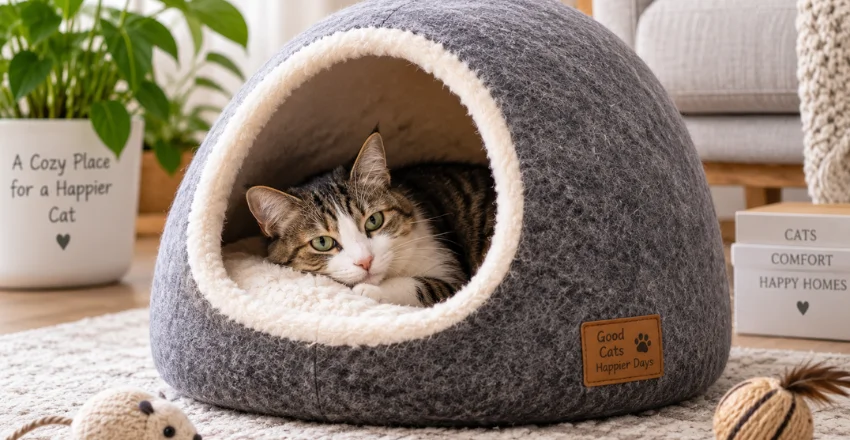
Put the bed somewhere calm while keeping it connected to normal household life. A quiet corner of a bedroom or living room often works better than a busy hallway. Avoid positioning it beside noisy appliances or directly beside the litter box. Many cats also enjoy locations that provide a view without heavy foot traffic.
Ohio State University’s Indoor Pet Initiative recommends safe hiding areas and notes that cats often value elevated locations. A low shelf or secure furniture platform can work when the bed and cat are safely supported. If the hideaway sits in a shared living area, consider how its color fits the room. NewspaperLA’s guide to choosing a living-room color scheme offers ideas for coordinating neutral and contrasting tones.
How to Encourage Your Cat to Use It
Do not push or place your cat inside the new bed. Cats generally respond better when they can investigate a new object on their own. Put the bed near an existing favorite sleeping location and give it time. A familiar blanket can make the space smell less foreign. You can also place a favored toy near the entrance without blocking access. Keep the surrounding area quiet during the first few days.
Moving the bed repeatedly can slow acceptance. Feline environmental guidelines suggest cats value familiar, predictable environments. Give the chosen location enough time before deciding the bed has failed.
Which Style Makes the Most Sense?
For most healthy indoor cats that already seek boxes, a wool felt pod or stable plush dome is the strongest starting point. Felt offers structure and lasting enclosure, while plush usually makes routine washing easier. Choose between them based on your cat’s sleeping behavior and your cleaning preferences.
A structured cube makes more sense for bigger cats or homes needing multiple functions from one piece. Hooded beds suit animals that dislike complete enclosure. Heated models are more specialized and should be chosen for a clear comfort need. The product matters, but placement and individual preference matter too. Even a well-made bed can sit unused if you place it in a noisy spot.
Give your pet a choice instead of treating one sleeping spot as mandatory.
The Bottom Line
Choose an enclosed bed based on your cat’s behavior, body size, and daily environment. Prioritize stable construction, usable interior room, simple cleaning, and a quiet placement. Those practical details usually matter more than decorative features. If your pet already searches for boxes or sheltered corners, an enclosed bed is a sensible option to try. Give your cat time to explore it on its own. For more home and lifestyle ideas, explore NewspaperLA’s latest coverage.
Frequently Asked Questions
Do cats need a cat cave?
Not every cat needs this specific bed style. Cats do benefit from access to safe, comfortable resting and hiding locations. A cardboard box, suitable carrier, covered bed, or secure shelf may serve the same basic purpose.
Are enclosed beds good for anxious cats?
They can provide a useful hiding option, especially when cats seek concealment during stressful events. Research in shelter settings found faster behavioral stress reduction when hiding boxes were available. Household anxiety can have many causes, so persistent changes still deserve veterinary guidance.
How big should an enclosed cat bed be?
The interior should let your pet enter, turn, curl, and exit comfortably. Measure your cat rather than choosing by breed labels alone. Check both the entrance size and the usable internal dimensions before ordering.
How often should you wash the bed?
Wash removable bedding whenever it becomes visibly dirty or develops noticeable odor. Follow the manufacturer’s instructions because wool, foam, and synthetic fabrics require different care. Regular vacuuming can reduce loose hair between deeper cleanings.
What if my cat refuses to use the new bed?
Leave it available without forcing interaction. Try placing it near an established sleeping area and adding familiar bedding. Some cats prefer open beds, so not using it doesn’t automatically mean something is wrong.

