
Yes, dogs are born with umbilical cords because puppies develop as placental mammals. Each cord connects a developing puppy to its placenta before birth. After delivery, the cord separates and leaves the small scar we call a belly button.
| Question | Quick answer |
|---|---|
| Do puppies have umbilical cords? | Yes. Each puppy is connected to a placenta before birth. |
| What happens after birth? | The mother usually severs the cord, leaving a short stump. |
| Where is a dog’s belly button? | On the midline of the abdomen, directly below the rib cage. |
| Why is it hard to see? | The scar is small, flat, and often covered by fur. |
| When is a vet needed? | Seek advice for swelling, redness, discharge, pain, or a persistent bulge. |
Direct answer: Do dogs have umbilical cords? Yes. Puppies develop attached to placentas that exchange oxygen, nutrients, and waste with the mother’s circulation. After birth, the mother usually breaks the cord, and the remaining stump dries and falls away. A small, flat navel scar remains on the puppy’s abdomen.
Key Takeaways
- Puppies have a cord during fetal development and at birth.
- The mother usually chews or breaks the cord after delivery.
- The remaining stump normally dries and falls off within a few days.
- A dog’s belly button is usually a faint, flat scar.
- A bulge near the navel can be an umbilical hernia.
- Redness, discharge, pain, or illness deserves veterinary attention.
Do Dogs Have Umbilical Cords Before and During Birth?
Every puppy develops inside the uterus with a placenta that supports fetal growth. The cord creates the physical connection between the puppy and that placenta. Blood vessels within it carry materials needed during development and remove fetal waste products.
The mother’s blood does not simply flow directly into each puppy. Instead, the placenta allows exchange between separate maternal and fetal circulations. This system supports the puppy until birth, when it begins breathing and feeding independently.
This anatomy explains why dogs also have belly buttons. A navel is the healed attachment site left after the fetal connection ends. The scar remains even though it has no useful job after birth.
What Happens to a Puppy’s Cord After Birth?
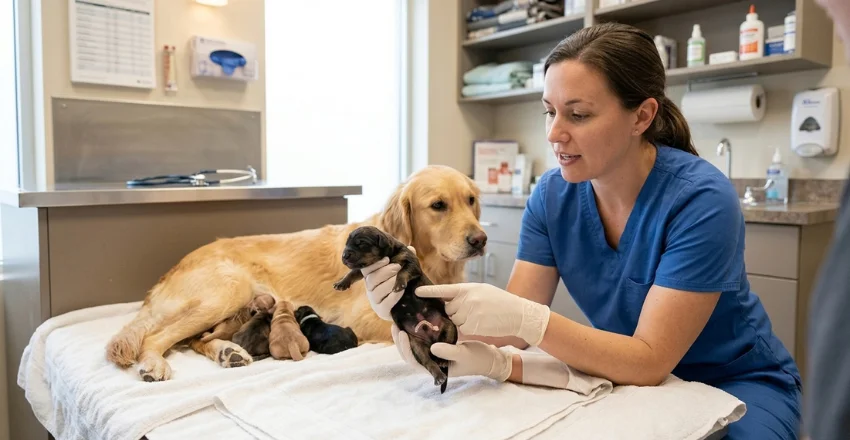
Most mother dogs open the birth sac and clean each newborn soon after delivery. During that process, the mother usually severs the cord near the puppy’s abdomen. A small stump remains attached for a short period.
That stump gradually dries, shrinks, and separates as the tissue heals. PetMD says the umbilicus should dry and fall off after about three days. Timing can vary slightly, so appearance and puppy health matter more than the clock alone.
Breeders sometimes need to assist when a mother does not manage the sac or cord. That situation requires clean technique and careful handling of the newborn. New puppy owners should ask a veterinarian for guidance rather than pulling at the stump. More newborn and companion-animal care coverage sits in NewsPaperLA’s Pets section.
Where Is a Dog’s Belly Button?
A dog’s navel sits on the underside of the abdomen near the body’s midline. Veterinary sources place it directly below the rib cage. Look for a small scar rather than a deep human-style navel.
The mark may appear as a tiny line, wrinkle, or slightly different patch of skin. Fur can hide it almost completely on many adult dogs. Gently parting the coat may make the scar easier to find.
Nipples are easier to identify because several appear in two rows along the belly. The navel is a single central mark instead. If touching the area causes pain, stop and contact your veterinarian.
Why Dog Belly Buttons Look Different From Human Navels
Human navels often form a noticeable depression or projection after the cord heals. Canine navels usually heal flatter and leave a much smaller scar. The surrounding coat hides the mark further as a puppy grows.
| Feature | Dogs | Humans |
|---|---|---|
| Before birth | Connected to a placenta | Connected to a placenta |
| After delivery | Mother usually severs the cord | Medical staff usually clamp and cut it |
| Typical navel | Small, flat scar | Often a visible innie or outie |
| Visibility | Often hidden by fur | Usually easy to see |
The basic biological purpose is similar before birth. The visible result differs because anatomy, cord size, and healing patterns differ. That is why many owners never notice their dog’s belly button.
What Is Normal for a Newborn Puppy’s Navel?
A normal stump should dry out over the first few days. The surrounding skin should not become increasingly red, swollen, or wet. Daily observation matters because newborn puppies can decline quickly when infection develops.
PetMD notes that umbilical infection can lead to sepsis in newborn puppies. Concerning signs include discharge, persistent bleeding, swelling, or a foul odor. Poor feeding, weakness, or unusual crying also justifies prompt veterinary advice.
Do not tug on a stump just because it appears ready to fall. Pulling can injure healing tissue or restart bleeding. Let natural separation occur unless a veterinarian gives different instructions for that puppy.
What Is an Umbilical Hernia in a Dog?
An umbilical hernia forms when the opening in the abdominal wall does not fully close. Fat or other abdominal tissue may push through that opening. Owners often notice a soft bump where the navel should be.
Many small hernias cause no pain and may close as a puppy grows. VCA says some small openings can close naturally by three to four months. Persistent hernias may be repaired during spaying or neutering when appropriate.
Larger hernias deserve closer veterinary assessment because abdominal organs can enter the defect. Rarely, trapped intestine can lose its blood supply and become an emergency. A veterinarian can determine whether a bulge is reducible and whether surgery is needed.
When Should You Call a Veterinarian?
Call your veterinarian when the navel area looks infected or painful. Redness, heat, swelling, discharge, bad odor, or repeated bleeding are warning signs. A firm or growing bulge also deserves an examination.
Seek urgent care if a puppy with a hernia becomes weak or painful, or repeatedly vomits. Those signs can indicate a more serious abdominal problem. Newborns that stop nursing or become unusually quiet also need prompt professional assessment.
A veterinarian should check every new puppy during routine early care. That visit can confirm normal closure and identify a hernia before complications occur. It also gives owners a chance to ask about feeding, weight gain, and newborn care.
Can You Safely Look for Your Dog’s Belly Button?
Choose a calm moment when your dog is comfortable with gentle belly handling. Part the fur along the center of the abdomen below the rib cage. Look for a flat scar, and don’t squeeze any lump you find.
If your dog resists, do not force the examination. Pain or guarding can signal discomfort that deserves veterinary attention. A photo can help you track visible changes before an appointment.
Multi-pet households often check other animal safety questions during the same belly check. NewsPaperLA also covers sunflower safety for cats and related household pet concerns. Its cat cave guide offers another look at practical pet care and home comfort.
Frequently Asked Questions
Do dogs have umbilical cords when they are born?
Yes, puppies can be born still attached to the placenta by the cord. The mother usually breaks it while cleaning the newborn. A short stump remains and later dries away.
Do dogs have belly buttons?
Yes, every puppy has an attachment site that heals into a navel. It usually looks like a faint, flat scar. Fur and loose skin can make the mark difficult to see.
How long does a puppy’s cord stay attached?
The remaining stump commonly dries and falls away within a few days. PetMD considers about three days normal. Contact a veterinarian if the area stays wet, inflamed, bleeding, or foul-smelling.
Can a dog have an “outie” belly button?
A raised bump may be an umbilical hernia rather than a normal canine navel. Many small hernias are not emergencies, but they still need veterinary evaluation. Sudden pain, vomiting, or a firm trapped swelling requires faster attention.
Should I cut a newborn puppy’s cord myself?
Most mother dogs handle the cord without human help. Assistance may be necessary during a difficult whelping, which is the term for giving birth. Get veterinary or experienced breeding guidance before intervening whenever possible. More from us: Tetanus in Dogs.
The Bottom Line
Do dogs have umbilical cords? Yes, and that fetal connection is the reason every dog has a belly button. The cord supports development before birth, then leaves a small scar after separation.
Most adult navels need no special care and are easy to overlook. Newborn stumps and unusual belly bulges deserve more attention. Contact a veterinarian whenever the area becomes painful, swollen, red, wet, or otherwise abnormal.
Learning this small detail of canine anatomy can make routine belly checks more useful. It can also help owners recognize a possible hernia or infection sooner. For more animal-focused reading, visit NewsPaperLA’s Pets section and related pet guides.

