
If you search for a Jackie Robinson movie, the film you probably want is 42. The 2013 sports drama stars Chadwick Boseman as the baseball pioneer and Harrison Ford as Brooklyn Dodgers executive Branch Rickey. It focuses mainly on the events surrounding Robinson’s historic move into Major League Baseball. Elsewhere on the site: Javier Methol.
Yet 42 is not the only feature film about his life. The Jackie Robinson Story, released in 1950, has an extraordinary connection to its subject. Robinson plays himself, giving viewers two distinctly different cinematic versions of the same American story.
Jackie Robinson Movies at a Glance
| Detail | 42 | The Jackie Robinson Story |
|---|---|---|
| Release year | 2013 | 1950 |
| Lead actor | Chadwick Boseman | Robinson as himself |
| Director | Brian Helgeland | Alfred E. Green |
| Branch Rickey | Harrison Ford | Minor Watson |
| Rachel/Rae Robinson | Nicole Beharie | Ruby Dee |
| Main focus | 1946–1947 integration story | Broader early life and baseball career |
| Style | Modern biographical sports drama | Classic black-and-white biography |
| U.S. significance | Modern introduction to the story | Contemporary film starring its subject |
Direct answer: 42 is the best-known modern film about Robinson’s historic 1947 season with the Brooklyn Dodgers. Chadwick Boseman plays the pioneering second baseman, while Harrison Ford portrays Branch Rickey. A much earlier film, The Jackie Robinson Story, appeared in 1950 and features the baseball legend playing himself.
What Is the Jackie Robinson Movie 42 About?
42 follows the difficult path that brought a Black player into modern Major League Baseball. The story begins before his Brooklyn Dodgers debut and shows the pressures surrounding his signing. Much of the drama centers on the racism he encounters from fans, opponents, and people within baseball.
Branch Rickey believes the Dodgers can challenge baseball’s color barrier by signing the right player. He needs someone talented enough for the majors and disciplined enough to withstand extraordinary hostility. Robinson accepts that burden while refusing to surrender his ambition or dignity.
The story also gives meaningful screen time to Rachel Robinson, played by Nicole Beharie. Her presence shows that the consequences of the decision extend beyond the ballpark. The film presents their relationship as an important source of stability during an intensely public period.
The title comes from Robinson’s famous uniform number, 42. Major League Baseball later retired that number across its clubs in 1997. The connection makes the movie title short, recognizable, and closely tied to his continuing baseball legacy.
Who Plays Jackie in 42?
Chadwick Boseman portrays the baseball star in one of his breakthrough film roles. His performance combines the physical demands of baseball scenes with the emotional restraint required by the story. That combination helps explain why the role remains closely associated with Boseman’s career.
Harrison Ford plays Branch Rickey, the Dodgers executive central to the signing. Nicole Beharie portrays Rachel, while André Holland plays sportswriter Wendell Smith. Christopher Meloni, Lucas Black, Alan Tudyk, and John C. McGinley also appear in prominent supporting roles.
Writer-director Brian Helgeland was responsible for bringing the 2013 film to the screen. Rachel Robinson participated in the development process and reviewed details in the script. Her involvement gave the production direct access to someone who experienced this period beside her husband.
How Accurate Is 42?
42 is based on documented events, but it remains a dramatized feature film. Its central history is real: Robinson joined the Brooklyn Dodgers in 1947 and broke Major League Baseball’s modern color barrier. The racial hostility surrounding that achievement is also an essential part of the historical record.
The movie recreates several real people and incidents while compressing a complicated period into a feature-length story. Director Brian Helgeland researched historical games and accounts while developing the screenplay. Rachel also provided input during production.
Still, viewers should not treat every scene as a literal historical record. The famous scene showing the player smashing a bat in a tunnel was created for dramatic purposes. Helgeland acknowledged that this private breakdown was not a documented event.
Other details were simplified, combined, or changed to make the narrative work onscreen. That is common in historical dramas, but the distinction matters for students and curious viewers. A biography or historical archive can provide context that a two-hour film cannot include.
What the Movie Leaves Out
One limitation of 42 comes from its narrow time frame. Baseball’s integration was larger than one executive, one player, or one season. Black journalists, activists, Negro League players, and other figures helped create pressure for change.
Sportswriter Wendell Smith appears prominently, but the broader Black press had a significant role in the integration campaign. The film also gives limited attention to other Black baseball pioneers. Larry Doby, for example, integrated the American League with Cleveland later in 1947.
The Montreal chapter of Robinson’s professional career also receives less attention than its historical importance deserves. He played for the Montreal Royals before joining Brooklyn. That season helped prepare him for the competition and scrutiny awaiting him in the majors.
These omissions do not erase the movie’s historical value. Instead, they show why the film works best as an introduction rather than a complete biography. Viewers interested in the history can use its major events as starting points for further reading.
The 1950 Film Offers Something 42 Cannot
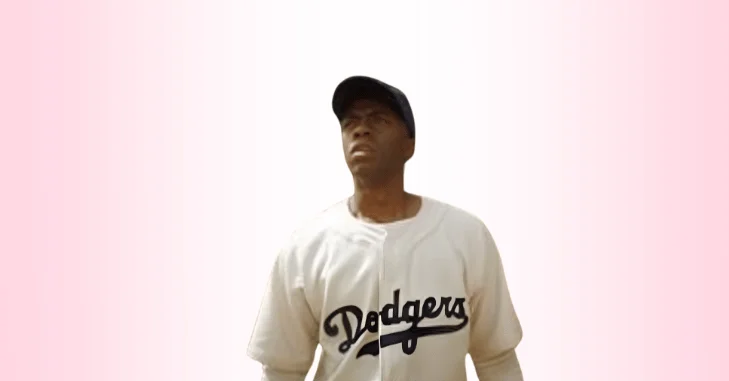
Long before Chadwick Boseman wore number 42 onscreen, audiences saw the real player portray himself. The Jackie Robinson Story premiered in 1950, only three years after his historic Dodgers debut. Alfred E. Green directed the black-and-white production.
Ruby Dee plays Rae Robinson, while Minor Watson portrays Branch Rickey. The film traces important stages of its subject’s early life and athletic development. Its 77-minute running time makes it considerably shorter than many modern biographical dramas.
Its greatest distinction is obvious but remarkable: the central historical figure is also the leading actor. Audiences are not watching a later performer imitate his movements or voice. They are watching the athlete present a film version of his own story while his baseball career was still active.
That does not automatically make every scene historically definitive. The movie was produced within the social and filmmaking conventions of 1950. Still, its proximity to the events gives it a perspective that no modern recreation can duplicate.
42 vs. The Jackie Robinson Story
| Category | 42 | The Jackie Robinson Story |
|---|---|---|
| Best reason to watch | Accessible modern drama | Unique historical perspective |
| Lead performance | Chadwick Boseman | The baseball star himself |
| Visual presentation | Modern color production | Black-and-white classic |
| Historical distance | Made decades later | Released shortly after integration |
| Story emphasis | Dodgers’ breakthrough | Broader biographical treatment |
| Useful for | New viewers and classrooms | Film and baseball history fans |
Choosing between them depends on what you want from the experience. 42 offers polished modern filmmaking, a larger production, and a memorable performance from Boseman, while Octavia Spencer’s career profile shows how other actors have built lasting screen careers. The 1950 picture offers something rarer: direct participation by the person whose history it dramatizes.
Watching both can be more useful than treating either film as the final account. The differences reveal how American movies portrayed the same achievement in two eras. They also give viewers a reason to compare dramatized scenes with documented history.
Why 42 Still Connects With American Audiences
The baseball story works because the stakes extend beyond wins and losses. Robinson faced pressure connected to race, employment, family, public behavior, and national attention. His success challenged a segregated institution in front of enormous audiences.
Major League Baseball continues to commemorate that legacy through Jackie Robinson Day on April 15. Players, managers, coaches, and on-field personnel wear number 42 for the annual observance. That tradition gives younger audiences a direct connection between the history and today’s game.
MLB also supported screenings of 42 for young people after its theatrical release. That effort reflected the film’s usefulness as an introduction to baseball history. The movie can open a discussion even when viewers later investigate where Hollywood changed details.
Is 42 Appropriate for Students and Families?
42 is rated PG-13 and deals directly with racist abuse. Some scenes contain racial slurs and threatening behavior that reflect the hostility surrounding integration. Families and teachers should consider that language before showing the film to younger children.
For older students, those scenes can support conversations about landmark cases like Loving v. Virginia, professional sports, journalism, and the civil rights era. The movie also provides opportunities to separate primary history from dramatization. Comparing scenes with historical sources can make the viewing experience more educational.
The 1950 film provides another useful comparison for classrooms. Students can examine how the same story was presented shortly after the events and decades later. That comparison can encourage questions about filmmaking, memory, race, and changing American audiences.
Frequently Asked Questions About the Jackie Robinson Movie
What is the Jackie Robinson movie called?
The best-known modern film is 42, released in 2013 and starring Chadwick Boseman. Its title refers to the uniform number associated with the Brooklyn Dodgers star. There is also a 1950 biographical film called The Jackie Robinson Story.
Did Chadwick Boseman play him in 42?
Yes, Boseman portrays the pioneering baseball player in 42. Harrison Ford plays Dodgers executive Branch Rickey, while Nicole Beharie portrays Rachel. The role became an important early milestone in Boseman’s film career.
Did the real baseball player appear in a movie?
Yes, he starred as himself in The Jackie Robinson Story. The film opened in 1950, while he was still an active Major League player. Ruby Dee and Minor Watson appear alongside him.
Is 42 completely historically accurate?
No historical drama should automatically be treated as a documentary. 42 uses real people and major events but changes or compresses some details. The tunnel scene involving a broken bat is one documented example of dramatic invention.
Why is the movie called 42?
The title refers to the player’s Brooklyn Dodgers uniform number. MLB retired number 42 throughout the league in 1997. The number remains central to baseball’s annual commemoration of his legacy.
Which Film Should You Watch First?
Start with 42 if you want an accessible modern introduction to the baseball breakthrough and its human cost. Boseman’s performance and the focused 1940s setting make the history easy to follow. Then consider the 1950 film for a striking look at how the story reached screens during the player’s lifetime.
Neither movie can contain every part of this history. Together, however, they provide two valuable perspectives separated by more than six decades of American filmmaking. Follow either viewing with reliable baseball and historical sources to distinguish documented events from screen drama.

